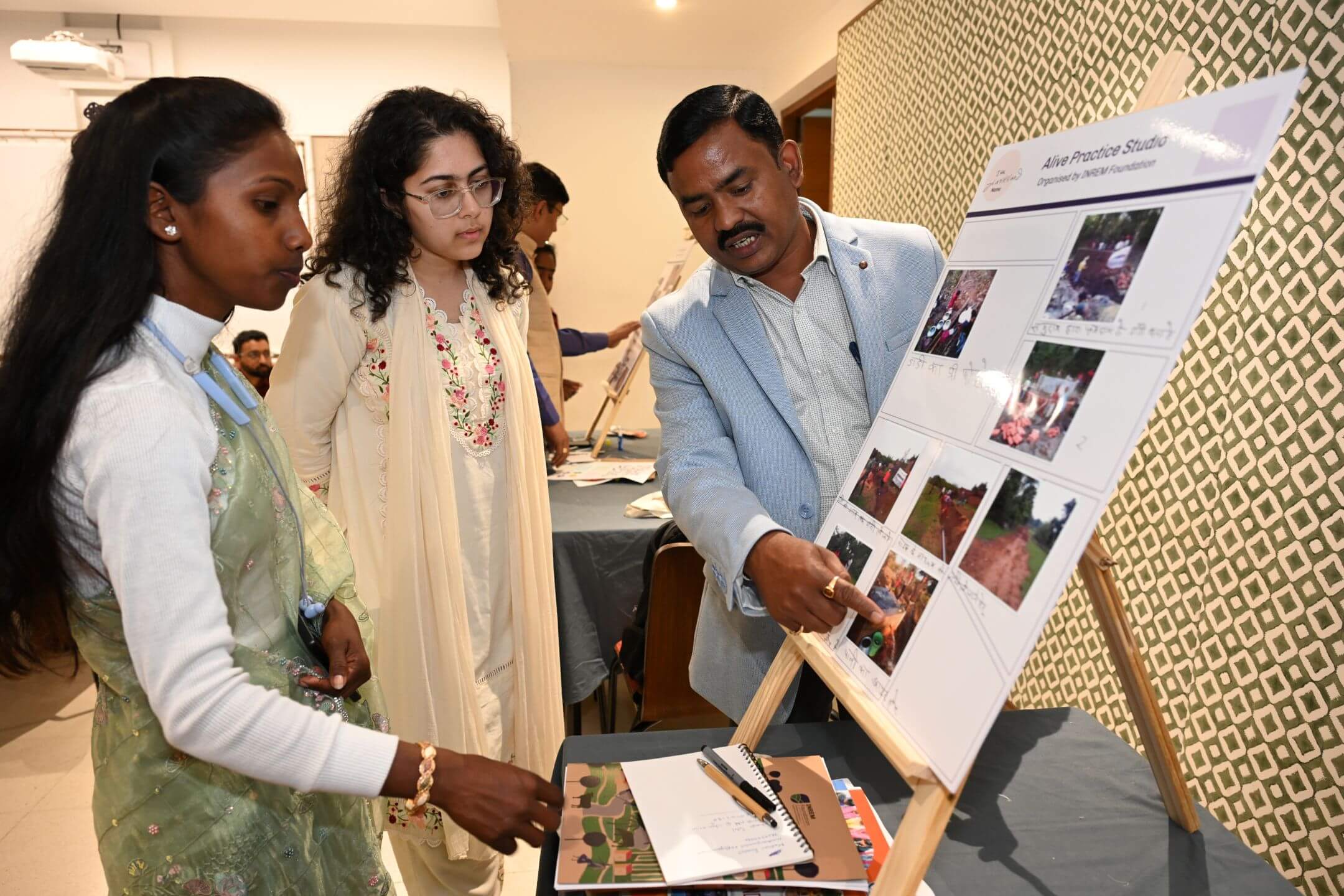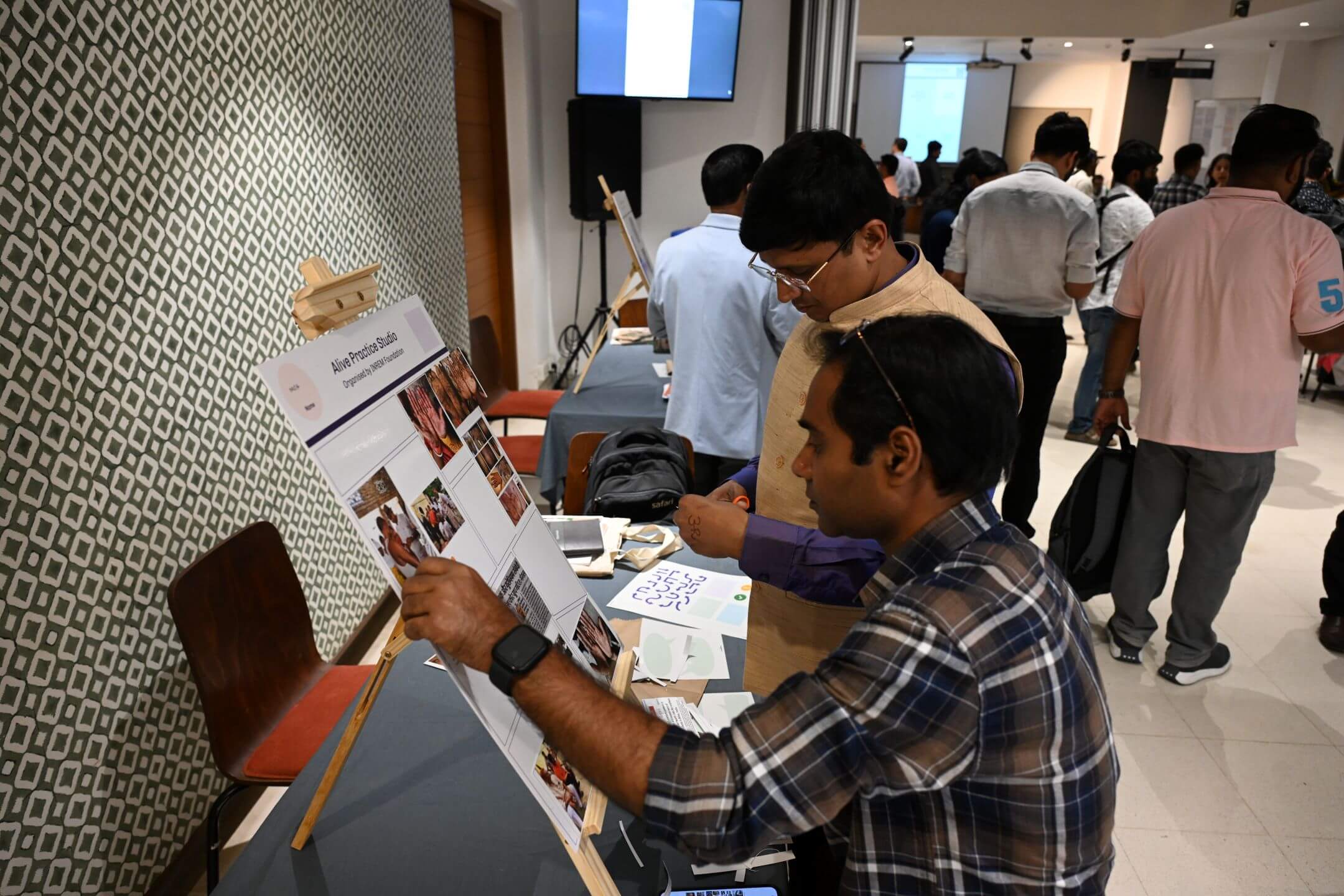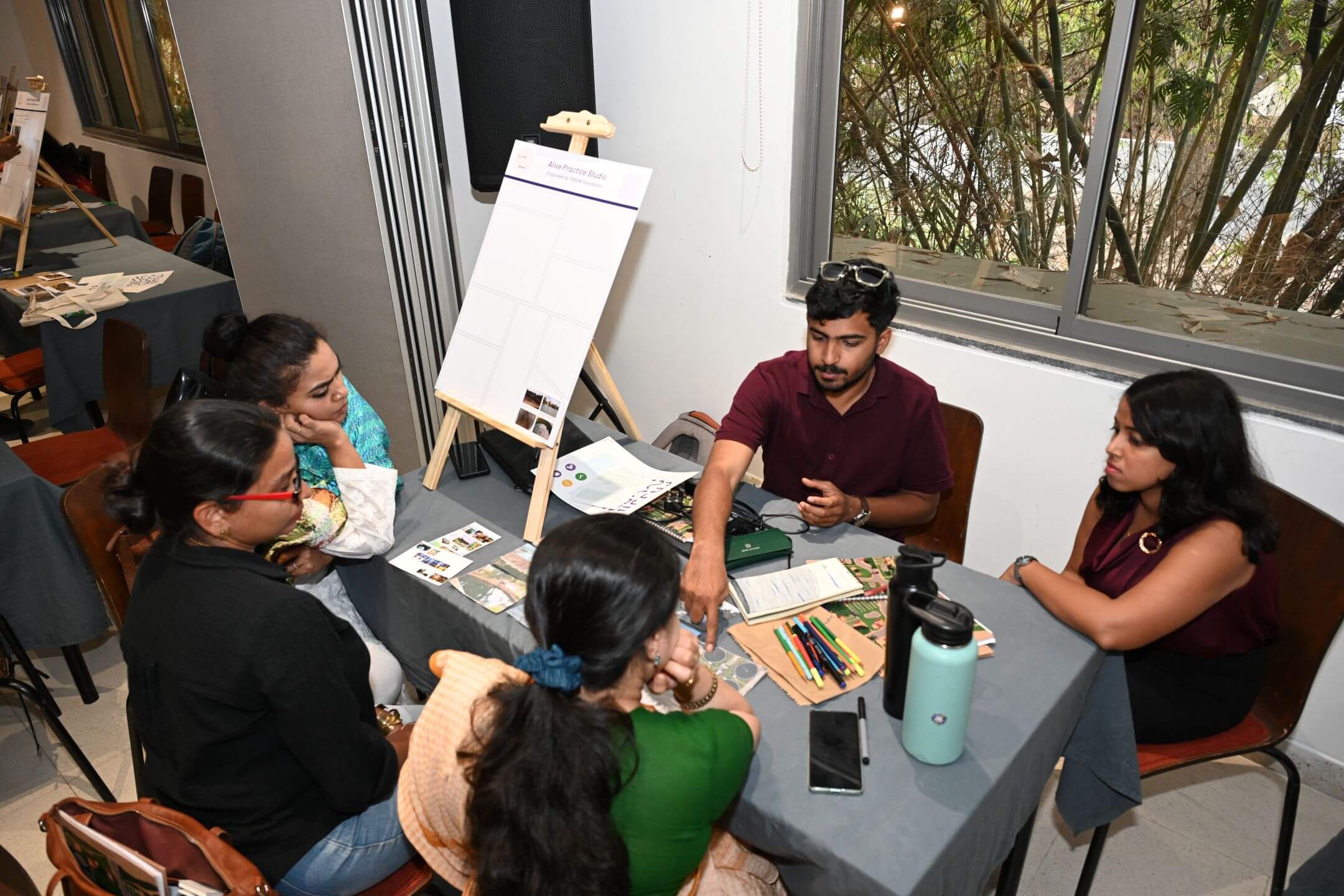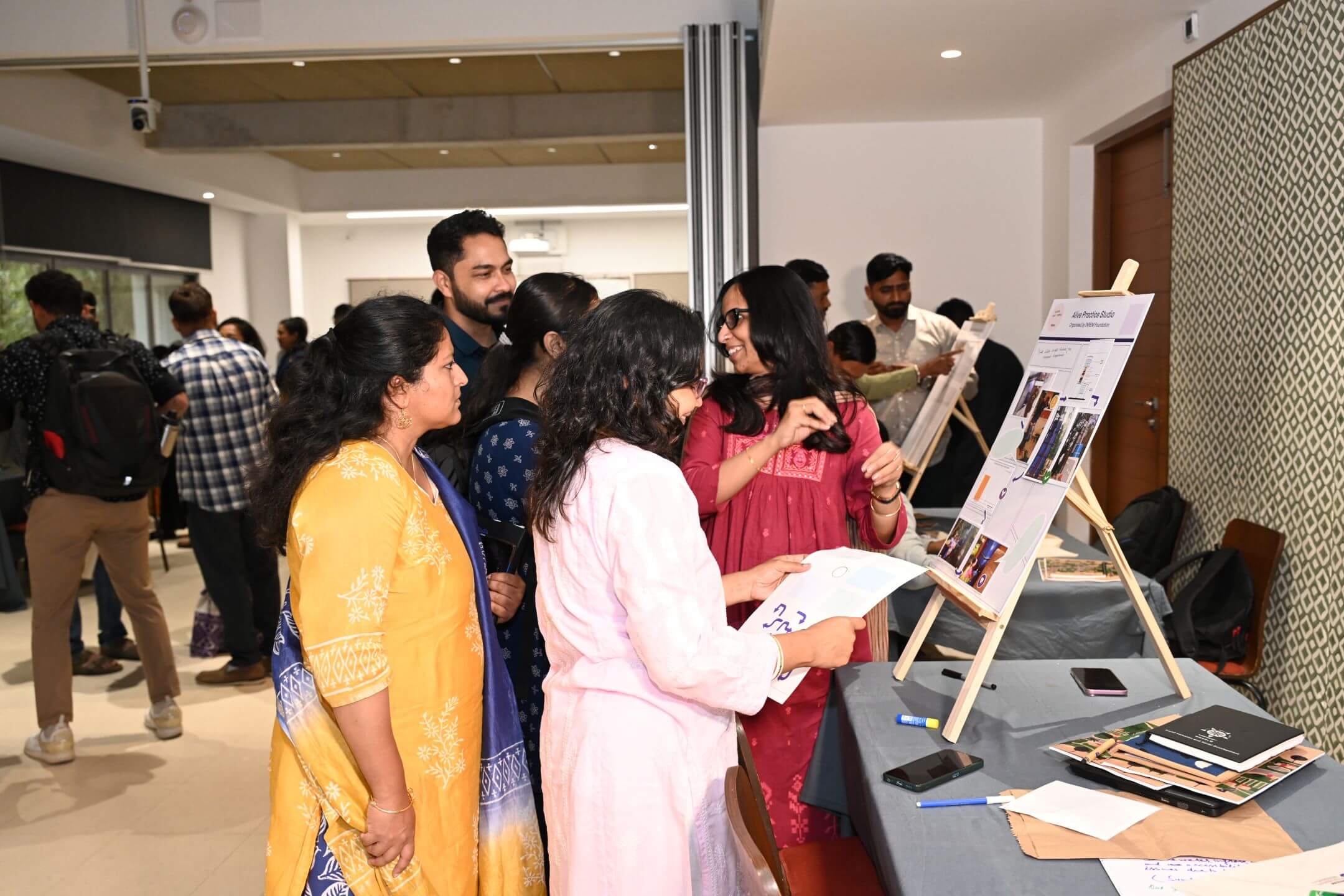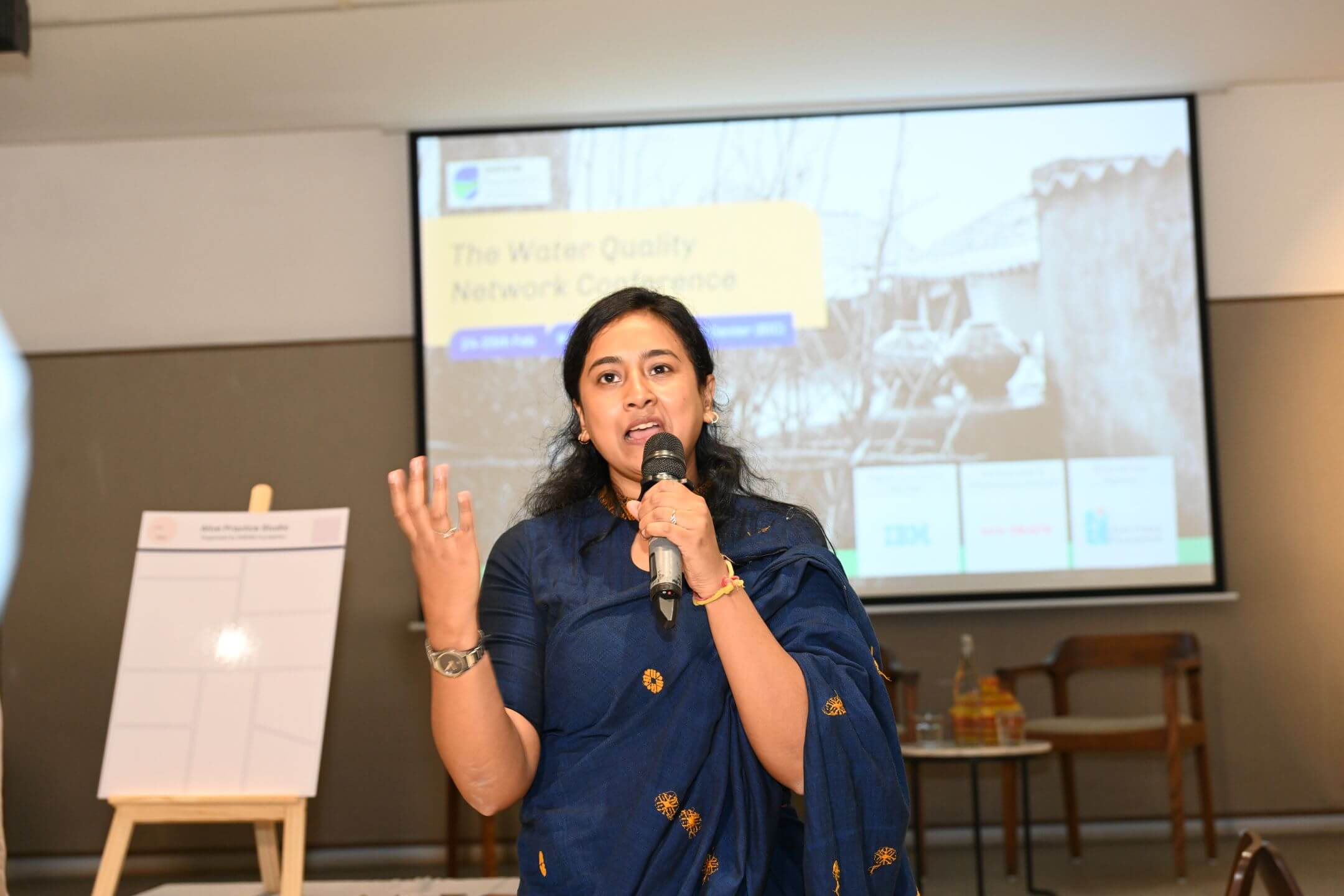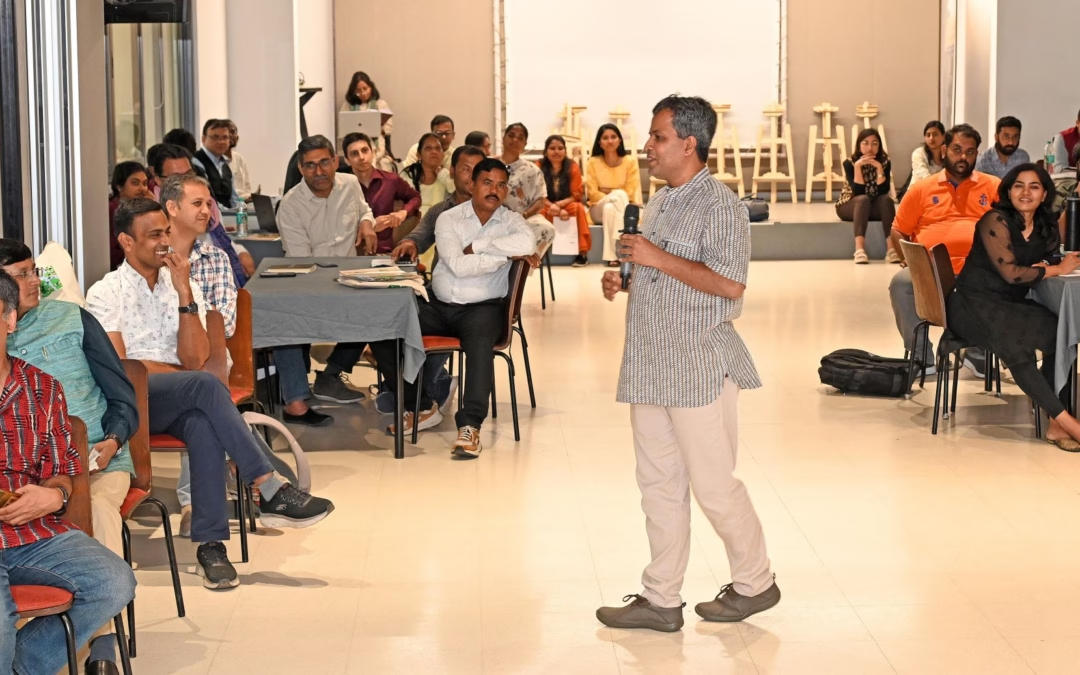
Session 2, Alive Practice Studio, asked a simple question. How do field stories come alive?
The report describes the studio as a space where stories were not presented like a readymade suit, but more like a patched artwork built from the sweat of together-labour. More than 16 storyboards were created, but what stood out most were the dialogues and questions that emerged when randomly matched participants asked changemakers, “So, why do you work in this place?”
The studio brought out stories through visual narration. Photographs, handwritten notes, media clippings and process snapshots together told the story of struggles with water contamination. These stories were long, layered and deeply complex.
What made the space work was the format. It was not a one-directional presentation. Participants walked up to the board, paused at different images, asked questions and shared reflections. The narrative evolved through conversation rather than a prolonged monologue.
This made the issue easier to understand. Water contamination is not only technical. It is social, ecological and institutional too. The visual fragments helped reveal the early signs of contamination, the health impacts, community concerns, evolving responses and gradual efforts to build local awareness and action.
The report notes that the product was not the story itself, but the conversations and the connections that created new meaning. It also suggests that system orchestration can be more atmospheric, building trust and space for creating together.
The experience opened the door for more studios like this, and for new ideas for Alive Practice Studio 2.0.