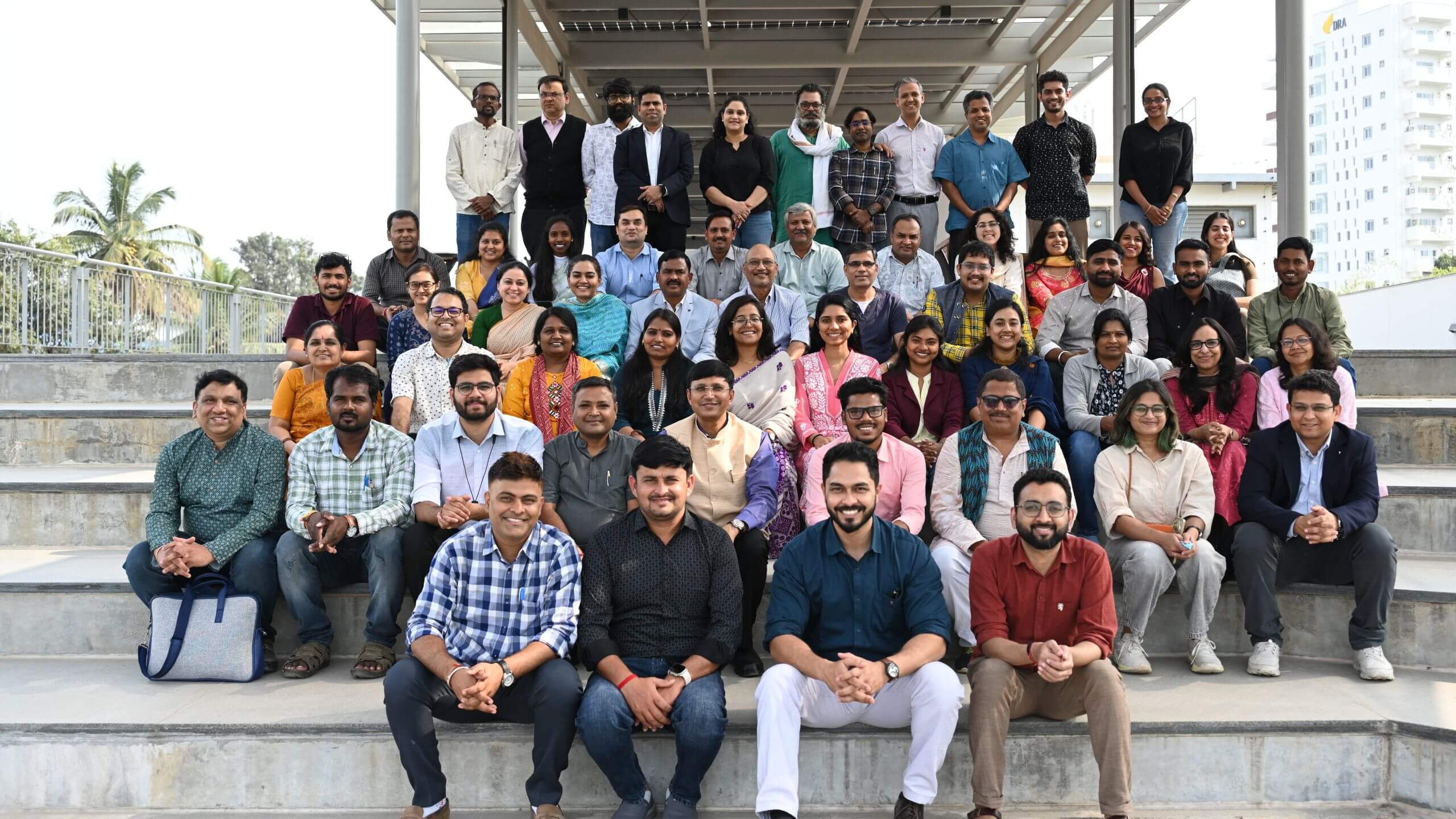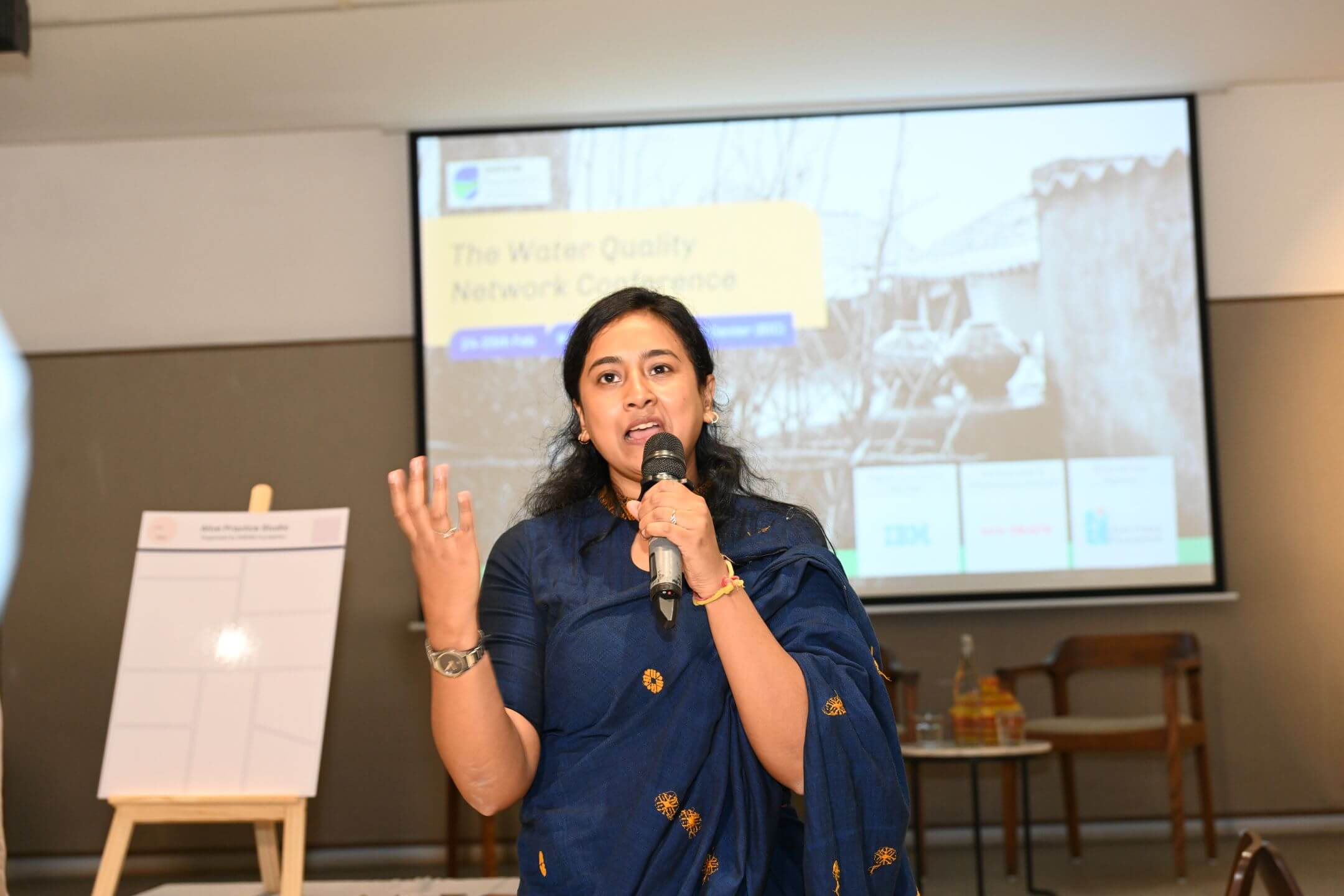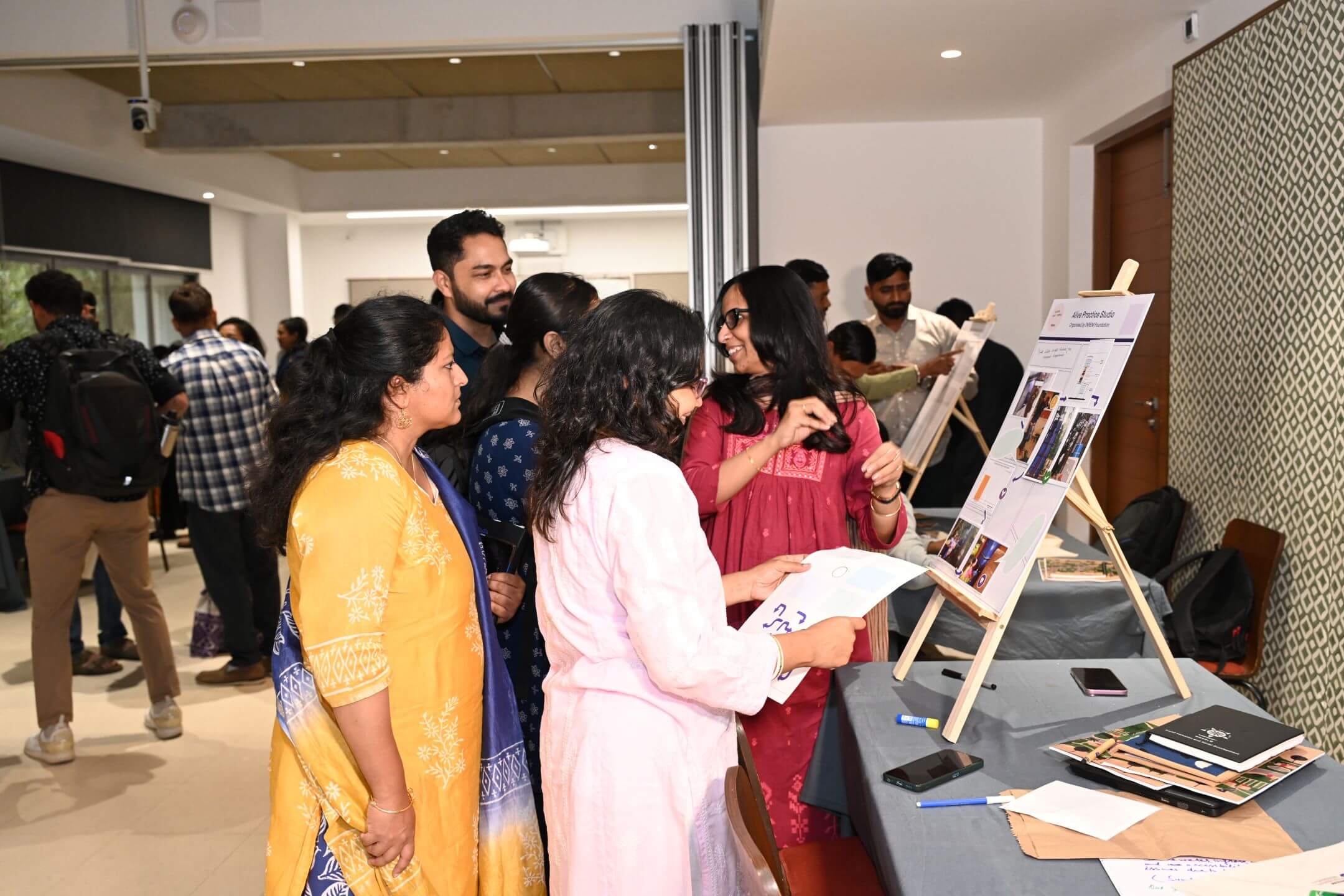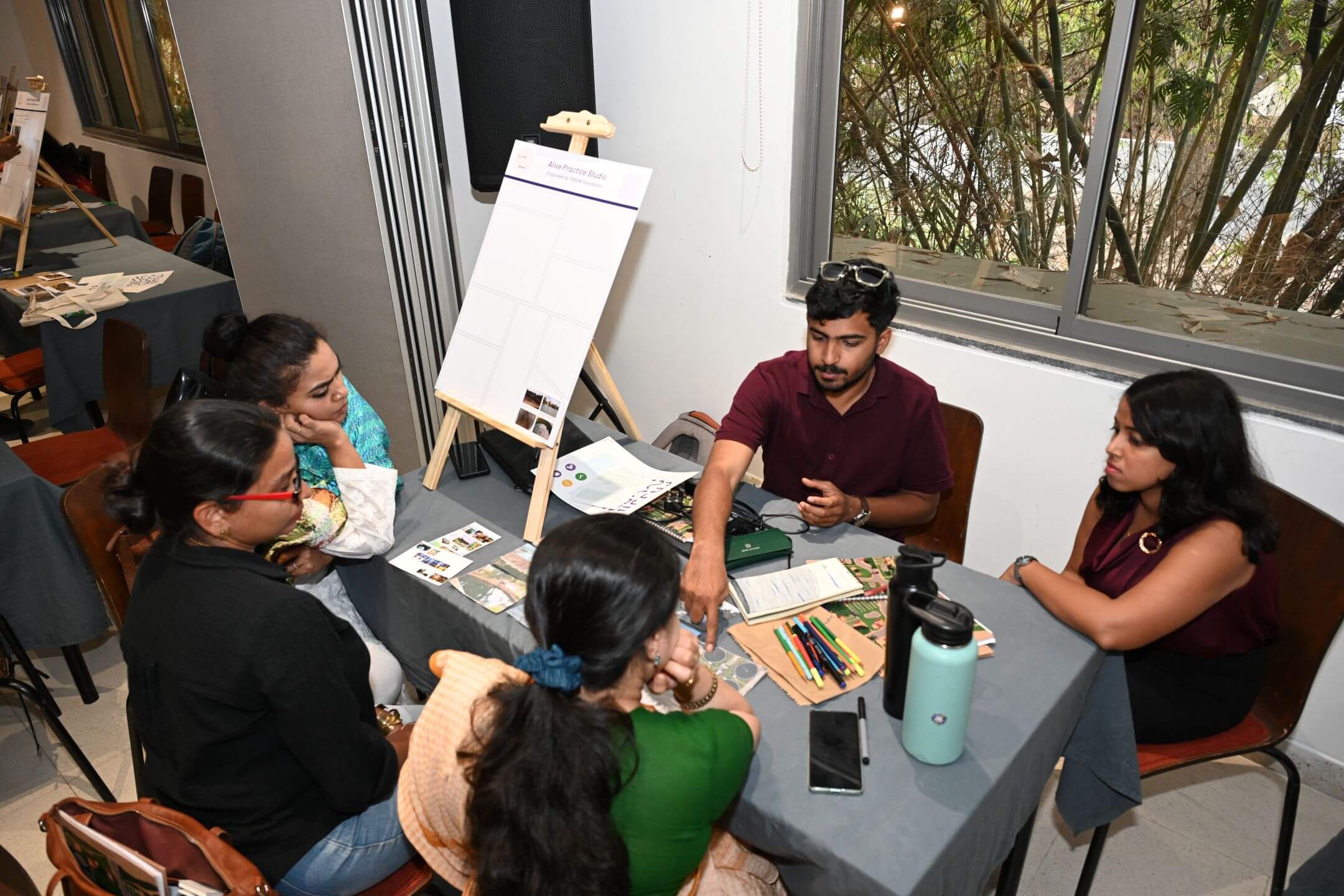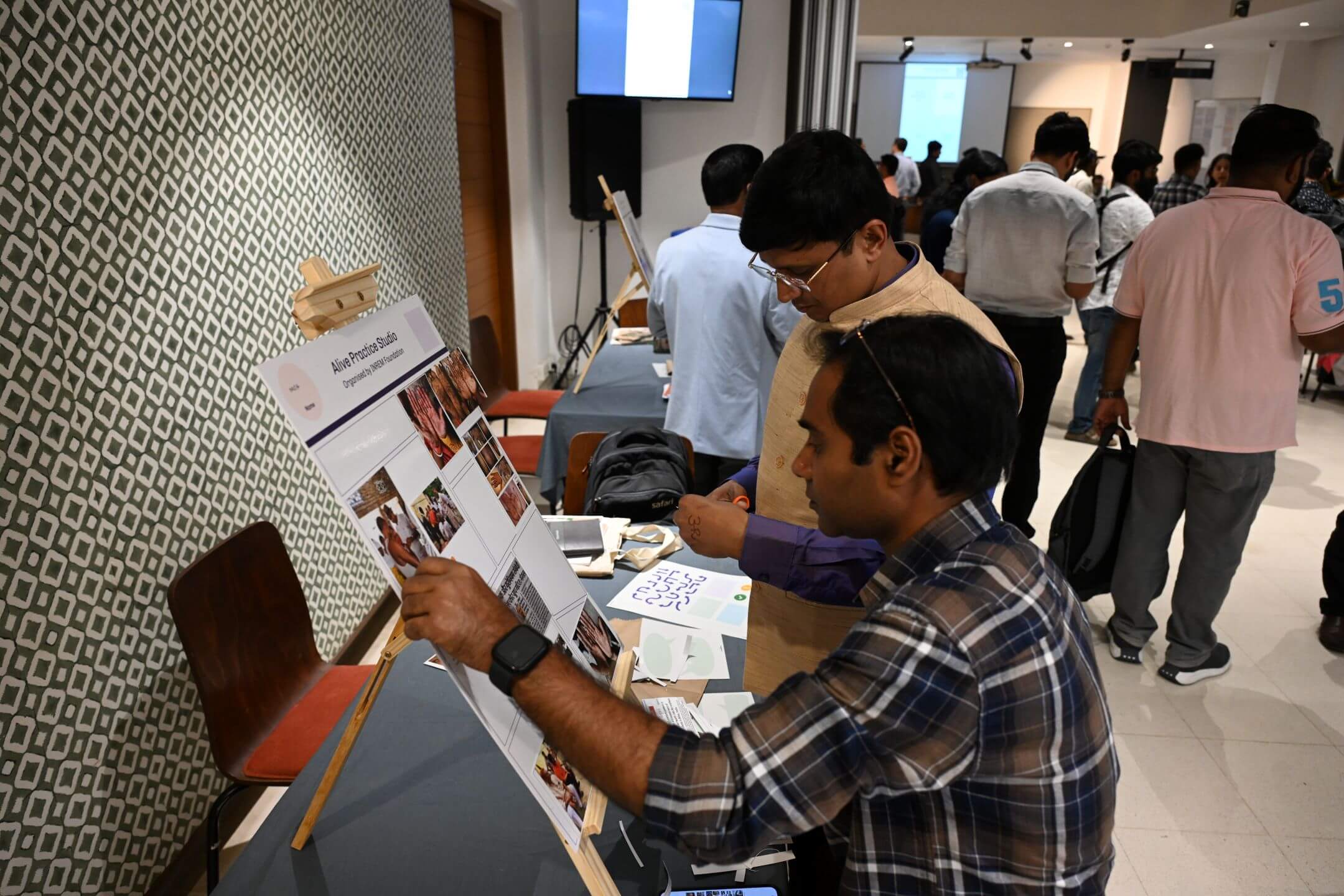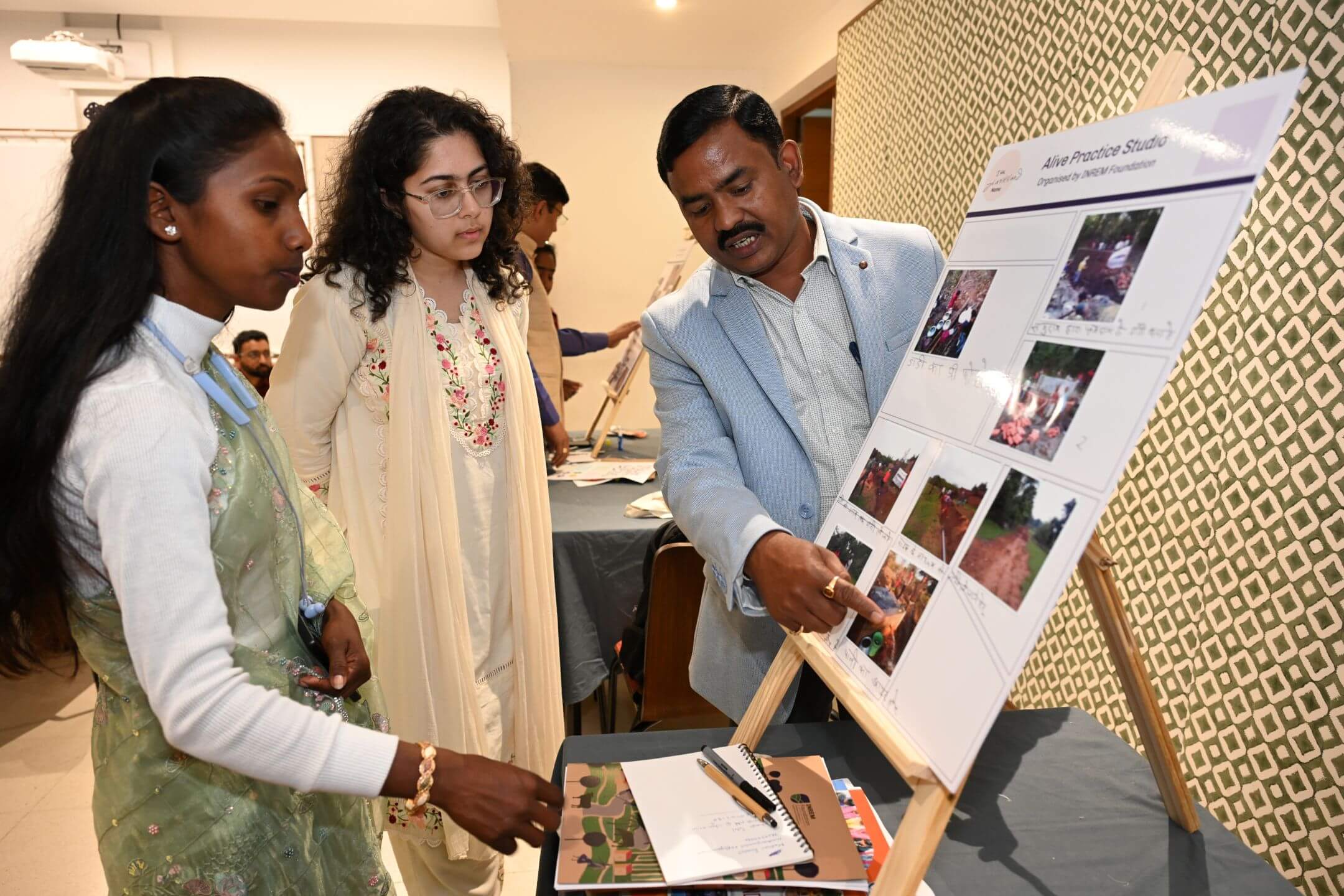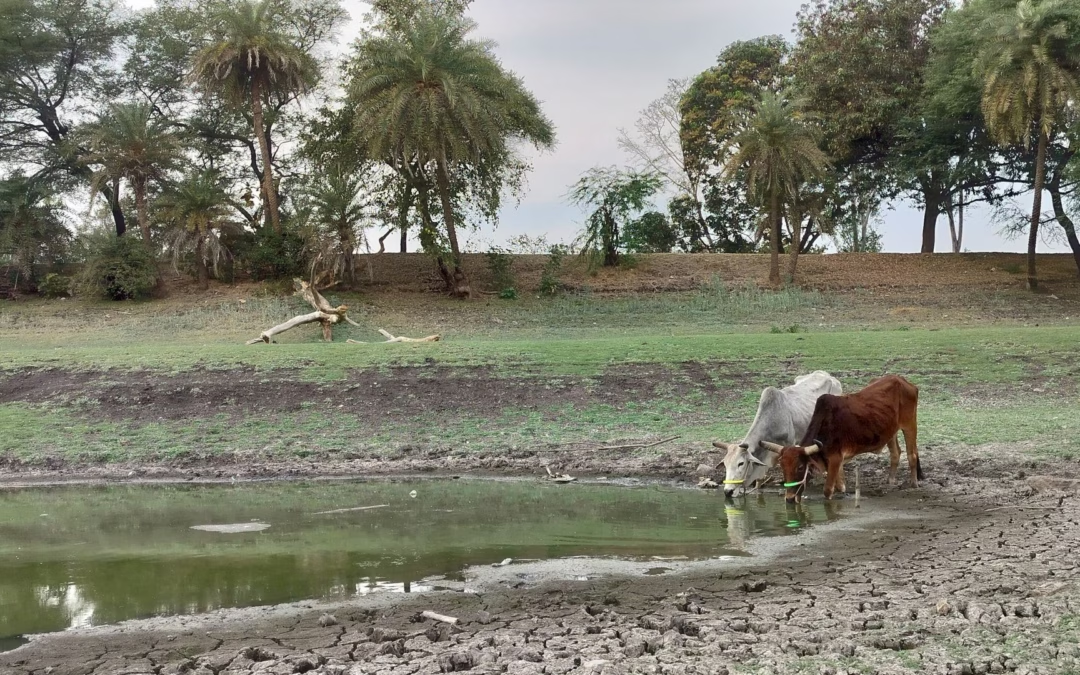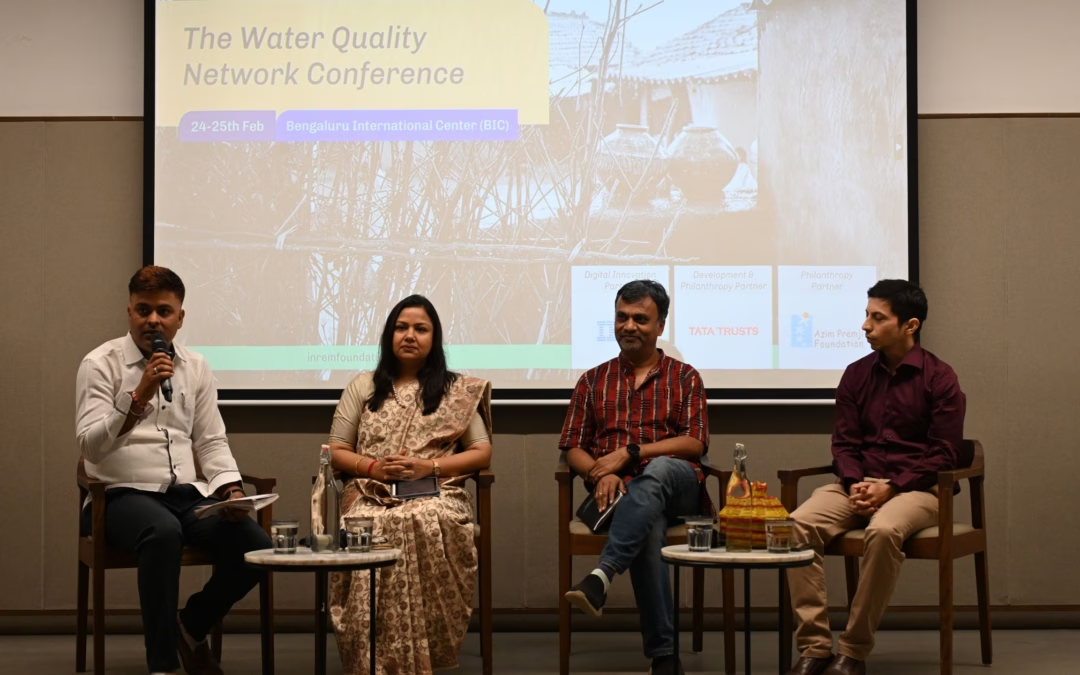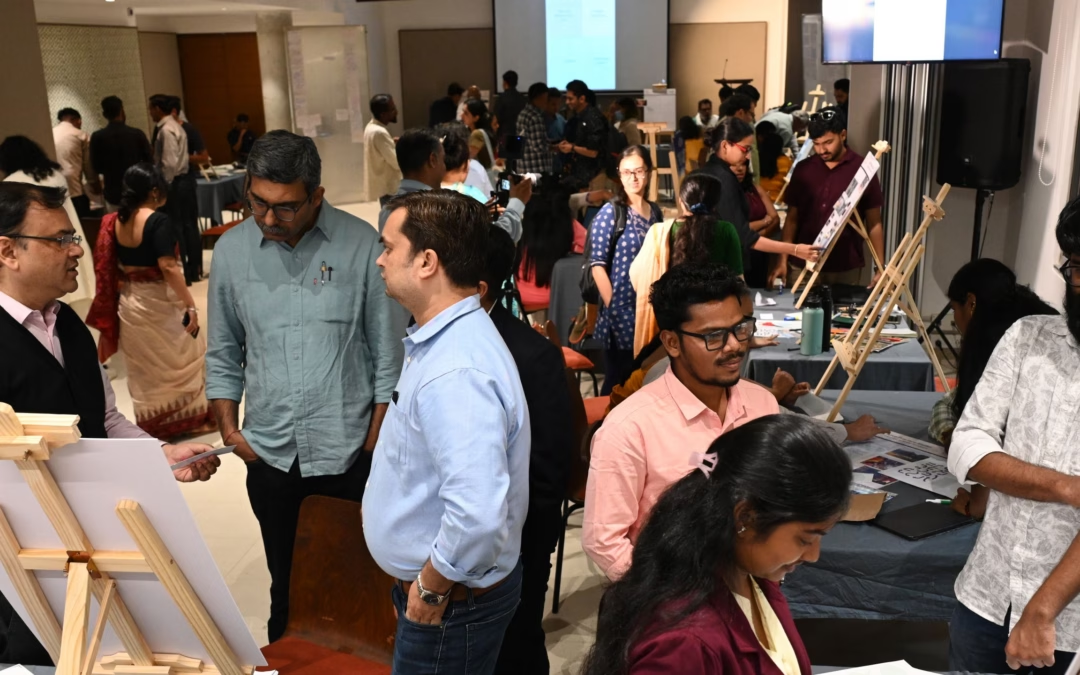
INREM Foundation convened the Water Quality Network conference at BIC Bangalore on February 25. The day brought together government, civil society, researchers, technologists, and community groups to share practical work on water quality. Outside the main sessions we hosted Alive Practice Studio, a short informal space designed for peer to peer exchange and hands on learning. The studio was compact, interactive, and highly focused on solutions and evidence.
Alive Practice Studio
Alive Practice Studio gave each partner a small space for an interactive storytelling session to share their impact and challenge story. It was not just an exhibition. It was a working space to exchange practice and to find practical overlaps for future collaboration.
The session had three parts. Create. Share. Dialogue.
Create
The organisations used the visual template to shape a short story. Storytelling mentors helped with structure, data points and visuals. The focus was on impact and lessons learned.
Share
Each organisation told their story to the small group using the template. Stories were short and focused on evidence and outcomes.
Dialogue
Group members gave peer feedback. The conversations focused on what worked, what remains unresolved, and realistic next steps.
The event hosted a diverse group of partners who brought lived experience and tested tools. The participants were:
Mahila Housing Trust, Gram Vikas, Biome, Megh Pyne Abhiyaan, Samaj Pragati Sahyog, Samerth, INREM Foundation, Yuva, Mahavir Centre, CMF Rajasthan, WaterAid, CML, CSPC, Jan Sahyog Kendra, Water for People.
Alive created immediate connections and concrete follow ups.