Imagine yourself traveling to your native village. As you are offered a glass of water, a sudden doubt comes to your mind: Should you have carried your own glass of bottled water? Can you trust the water here?
You Google: “ How do I know the quality of water anywhere in India? ”
Up comes the JalXChange Water Safety Advisory tool. It takes you 30 seconds to register on a WhatsApp bot and share your location.
Here is where your journey starts.
Addressing the Challenges
This question above bothered us in INREM for many years.
How can any citizen anywhere access data and also be able to understand it?
Anyone should be able to take action based on this data.
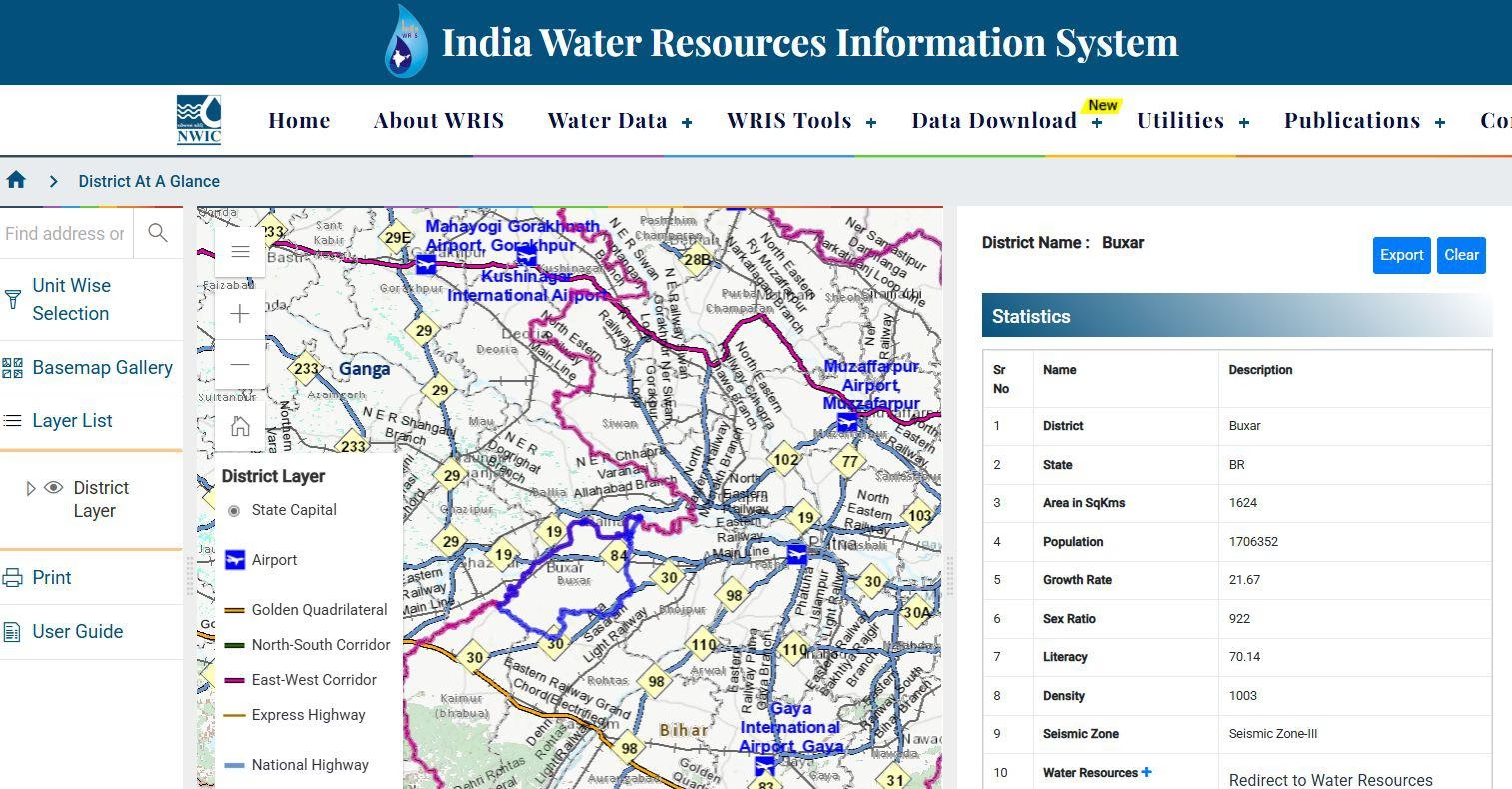
When we did a basic survey, we found 200 different Water data sets in India! There were 8 major Water Data portals, but if we look at the access metrics, they were quite poor.
So, what was the problem?
The challenge is multiple:
- We are not looking for Water Data. We are looking for answers to specific questions: Is my water safe? Which water purifier do I choose in my place?
- We cannot go about looking for Data everywhere. Especially when there is not any agreement between data, it just causes more confusion and decreases our trust on data.
Here is where thinking on Open Networks for Data came in. We realized that users cannot just keep going around looking for Water Data. There has to be a “layer” between all available Water data sets and the user, so that it becomes easy for anyone to make sense of information.
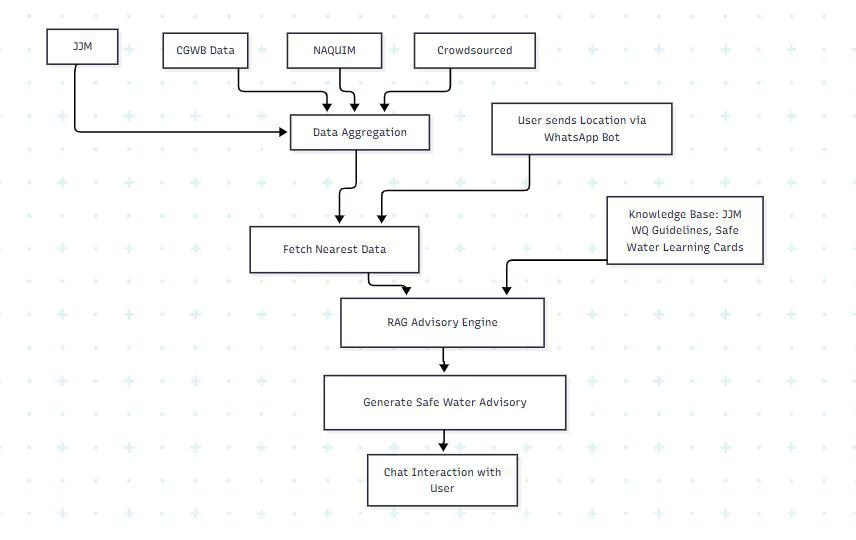
The Water Safety Data Advisory has come about with 2 years of development, user tests and now release. Here is what it brings to the table:
- Historical drinking water quality data available from 2010 to 2015 on data.gov.in
- Central Groundwater Board data, including NAQUIM data and some historical data
- Citizen data sources such as SamaajData, JalXChange and others
- Laboratory based water quality measurements done by rural drinking water programmes such as JJM
- Field based water quality measurements collected by field personnel in villages using Field Test Kits
- Other laboratory based water quality measurements in NABL certified or other laboratories commissioned by NGOs, Panchayats, CSR groups or citizen groups
The user need not go about looking for this data. Data should just walk to the user and also make sense in the language of the user.
This is where AI and LLMs come in. Along with Data aggregation, we have also integrated AI in a manner that interpretations of Data are made within the boundaries of trusted manuals and field based experiences that are fed to AI using a RAG – Retrieval-Augmented Generation. This ensures that minimal extrapolation or hallucination happens during Data interpretation by AI.
Water Data DPI and water safety use cases
The Water Safety Advisory Tool by JalXchange is being designed as part of a broader Water Data Digital Public Infrastructure (DPI). The idea is to connect water quality data, intelligence layers, and user-facing applications so that water safety decisions can be made more effectively.
The potential direction for this tool is to open up the space for multiple intelligence layers. One such possibility is to inform how Rainwater harvesting by groundwater recharge can happen – for diluting water in salinity affected aquifers. The same Open Data Network would open up opportunities for new solutions to get developed.
Coming back to your visit to the native place and your query to the Bot, what you actually end up discovering is more than what you intended. You learn that doing Rainwater harvesting in your village can create new Safe water pockets that can help ensure Water safety for a lot more people.
From looking at water as a threat, you become a safeguardian of water. This is the power of Data and how this tool can make expertise more democratic and changemaking more ubiquitous.
Want to try it out?
Write to us at hello@inremfoundation.org